


Leading CWDM Supplier
CNCR is a global leading supplier providing telecom access network solutions. Since the company was successfully listed in 2011, CNCR has always adhered to independent research and development and technological innovation, and successfully passed the highest level CMMI5 certification in the global software field.
-
![2U Semi-active CWDM Mux]() 2U Semi-active CWDM Mux1. Semi-acive CWDM mux devices 2. Support testing of the optical fiber breakpoint position with an accuracy of 3.Support line protection, switch time < 50 msread more
2U Semi-active CWDM Mux1. Semi-acive CWDM mux devices 2. Support testing of the optical fiber breakpoint position with an accuracy of 3.Support line protection, switch time < 50 msread more -
![3U Semi-active CWDM Mux for 4G/5G fronthaul]() 3U Semi-active CWDM Mux for 4G/5G fronthaul1. 3U Semi-acive CWDM mux devices 2. Support testing of the optical fiber breakpoint position with an accuracy of 3.Support line protection, switch time < 50 msread more
3U Semi-active CWDM Mux for 4G/5G fronthaul1. 3U Semi-acive CWDM mux devices 2. Support testing of the optical fiber breakpoint position with an accuracy of 3.Support line protection, switch time < 50 msread more -
![6 waves Passive CWDM Mux Demux used for 5G fronthaul]() 6 waves Passive CWDM Mux Demux used for 5G fronthaul1, 6 waves passive CWDM 1271-1371nm2, Support protection functionread more
6 waves Passive CWDM Mux Demux used for 5G fronthaul1, 6 waves passive CWDM 1271-1371nm2, Support protection functionread more -
![25G SFP28 20Km CWDM]() 25G SFP28 20Km CWDMModel:CLSFP-XGCLRD 1271/1291. Connector type:LC. Specification:25G/20kmread more
25G SFP28 20Km CWDMModel:CLSFP-XGCLRD 1271/1291. Connector type:LC. Specification:25G/20kmread more -
![12 waves Passive CWDM Mux Demux]() 12 waves Passive CWDM Mux DemuxModel:CL-OADM-CW6F-DP. Connector:LC. Channel:12 waves( 1271-1571)read more
12 waves Passive CWDM Mux DemuxModel:CL-OADM-CW6F-DP. Connector:LC. Channel:12 waves( 1271-1571)read more -
![25G SFP28 10km CWDM]() 25G SFP28 10km CWDMThe first six waves of 25G optical module, now used for 5G, are more mature, the subsequent will gradually back to 12 channelsread more
25G SFP28 10km CWDMThe first six waves of 25G optical module, now used for 5G, are more mature, the subsequent will gradually back to 12 channelsread more -
![5U Semi-active CWDM Mux For 4G/5G Fronthaul]() 5U Semi-active CWDM Mux For 4G/5G Fronthaul1. 5U Semi-acive CWDM mux devices 2. Support testing of the optical fiber breakpoint position with an accuracy of 3.Support line protection, switch time < 50 msread more
5U Semi-active CWDM Mux For 4G/5G Fronthaul1. 5U Semi-acive CWDM mux devices 2. Support testing of the optical fiber breakpoint position with an accuracy of 3.Support line protection, switch time < 50 msread more -
![10g SFP+ 10km Passive CWDM for 4G fronthaul]() 10g SFP+ 10km Passive CWDM for 4G fronthaul1. 10G SFP+ 10km CWDM for 4G fronthaul 2. Wavelength 1271nm/1291nm 3. Support DDMread more
10g SFP+ 10km Passive CWDM for 4G fronthaul1. 10G SFP+ 10km CWDM for 4G fronthaul 2. Wavelength 1271nm/1291nm 3. Support DDMread more -
![10G SFP+20Km CWDM]()


Active WDM Solution for 4G/5G Mobile Fronthaul
Semi-Passive WDM Solution for 4G/5G Mobile Fronthaul
Why Choose Us
Professional Engineer
500+ experts provides innovative solutions to ensure project quality and reliability.
Customizable R&D
Meet personalized needs, reduce costs, protect intellectual property rights, improve competitiveness, and enhance user experience.
Real-Time Support
7*24 hours global technical support service, quickly solve problems and improve user experience.
Certified Quality
CNCR products have passed various international certifications such as ISO, CE, ROHS, improve customers' market competitiveness.
Specification
|
Parameter |
Unit |
Specified Value |
|||||
|
Optical port parameters of transmitter |
|||||||
|
Transmission distance |
25G/20km |
||||||
|
Wavelength |
Nm |
1271, 1291 |
|||||
|
Maximum wavelength shift |
Nm |
±6.5 |
|||||
|
Maximum -20dB spectrum width |
Nm |
1.0 |
|||||
|
Minimum side mode rejection ratio |
DB |
30.0 |
|||||
|
Maximum average transmission power |
DBm |
+3.0 |
|||||
|
Minimum average transmission power |
DBm |
0 |
|||||
|
Minimum OMA transmitted power |
DBm |
-1.2 |
|||||
|
Maximum average transmitted optical power of switching off |
DBm |
-30.0 |
|||||
|
Minimum extinction ratio |
DB |
3.5 |
|||||
|
Maximum Transmission and (TDP) |
DB |
2.0 |
3.0 |
3.5 |
3.0 |
5.5 |
6.0 |
|
Maximum RIN12OMA |
DB/Hz |
-130.0 |
|||||
|
Optical return loss tolerance |
DB |
20.0 |
|||||
|
Minimum optical return loss at the transmitter |
DB |
26.0 |
|||||
|
Optical port parameters of receiver |
|||||||
|
Receiving wavelength range |
Nm |
1250~1620 |
|||||
|
Maximum bit error rate a |
- |
5×10⁻⁵ |
|||||
|
Maximum average receiving sensitivity |
DBm |
-20 |
|||||
|
OMA reception sensitivity |
DBm |
-20 |
|||||
|
Minimum Overload Optical Power |
DBm |
-4.0 |
|||||
|
Minimum OMA Overload Optical Power |
DBm |
-4.0 |
|||||
|
Receive damage thresholdb |
DBm |
-3.0 |
|||||
|
Maximum received optical reflection |
DB |
-26.0 |
|||||
|
A Under the fully random error statistics, the bit error rate can ensure that the frame loss rate of the system is less than 6.2×10⁻¹⁰. When the random error statistics cannot be met, the bit error rate shall ensure that the frame loss rate of the system is less than 6.2×10⁻¹⁰ |
|||||||
Advantages of CWDM


Cost-Effectiveness: CWDM are generally more cost-effective than Dense Wavelength Division Multiplexing (DWDM). The wider wavelength spacing in CWDM allows for simpler and less expensive transceiver designs.
Simplicity and Ease of Deployment: CWDM are easier to deploy and manage. The wider channel spacing reduces the complexity of optical components, making them more straightforward to manufacture, install, and maintain.
Scalability: CWDM provides a scalable solution, allowing network operators to start with fewer wavelengths and add more as needed.
Tolerance to Wavelength Drift: CWDM systems are more tolerant to wavelength drift, meaning transceivers do not need as precise control over the wavelength as those in DWDM systems.
Short to Medium-Haul Applications: CWDM is well-suited for short to medium-haul applications, such as metropolitan and regional networks.
Interoperability: CWDM adheres to industry-standard wavelength bands, ensuring interoperability among different vendors' equipment.
Lower Power Consumption: Many CWDM multiplexers are passive, meaning they do not require any power at all. This can be an important consideration for energy-efficient network design.
Upgradability: CWDM offer a path for future upgrades. Network operators can upgrade the system by adding additional wavelengths or transitioning to DWDM if higher capacity is needed, providing a smooth evolution as network demands increase.
Applications of CWDM
Healthcare
CWDM supports telemedicine and helps transfer large medical images between hospitals quickly.
Schools and Universities
CWDM helps connect multiple campuses and makes distance learning smoother.
Government Agencies
CWDM enhances emergency response systems and improves communication between offices.
TV Broadcasters
CWDM can distribute high-quality video content to support the growing demand for 4K and even 8K streaming.
Data centres
With CWDM, they can reduce the number of fibres needed while maintaining sufficient bandwidth.
Enterprise networks
CWDM allows businesses to expand their network capacity without laying new fiber, saving infrastructure costs.
Components of CWDM
CWDM Transceivers
These transceivers interact directly with devices on the network, such as routers, switches, and firewalls.
CWDM Multiplexers
This device combines different channels into one stream. This is the crux of CWDM.
CWDM Demultiplexer
This will perform the inverse operation of the MUX. This will take a stream of light and split them up.
Optical Fiber
Single-mode optical fiber is required to transmit the data. CWDM relies on the high travel capacity of single-mode fiber and its ability to send more data more reliably than multimode fiber.
Fiber Connectors
Appropriate fiber connectors, such as LC, SC, or MTP/MPO connectors, are used to connect the optical fiber to CWDM transceivers and other optical equipment.
CWDM Optical Attenuators
These are used to adjust the signal power of the light flowing through the CWDM system.
Difference between CWDM and DWDM
|
S. No. |
CWDM |
DWDM |
|
1. |
CWDM System having less than 8 active wavelengths per optical fiber. |
DWDM system having more than 8 active wavelengths per optical fiber. |
|
2. |
It is defined by wavelengths. |
It is defined by frequencies. |
|
3. |
It has lower capacity as compared. |
It has higher capacity as compared. |
|
4. |
It has low cost. |
It has high cost. |
|
5. |
It has short range communication distance. |
It has long range communication distance. |
|
6. |
It uses wide range frequencies. |
It uses narrow range frequencies. |
|
7. |
Its light signal is not amplified here. |
Its light signal amplification can be used here. |
|
8. |
Its no. of active wavelengths per fiber fewer than 8. |
Its no. of active wavelengths per fiber more than 8. |
|
9. |
It breaks the spectrum into big chunks. |
It dices the spectrum into small pieces. |
|
10. |
It has more wavelength spacing. |
It has less wavelength spacing as compared. |
|
11. |
It does not use cooling laser. |
It uses cooling laser that upholds temperature tuning and thus, provides better performance, increased safety and extend the lifespan of DWDM system. |
Usage Requirements
Maintain proper 20nm channel spacing to prevent signal overlap and ensure optimal transmission quality.
Use high-quality CWDM multiplexers and demultiplexers with low insertion loss to maintain signal integrity.
Respect maximum transmission distances, which depend on factors such as optical power budget and data rate.
Ensure that CWDM components are rated for the environmental conditions where they are deployed, especially for outdoor or industrial applications.
Order Process
Contact our sales team online via email at sarah.gu@cncr-it.com and provide the products and quantities you need to order and your customization requirements.
1
>>
Once we receive your custom requirements, we will contact you via email to confirm your order requirements.
2
>>
Once everything is confirmed, we will send you a quotation for your approval.
3
>>
Once we get your approval, we will start processing your custom order.
4
>>
Our technicians will control the quality during the production process.
5
>>
According to the delivery time, we will arrange shipment after receiving the remaining payment.
6
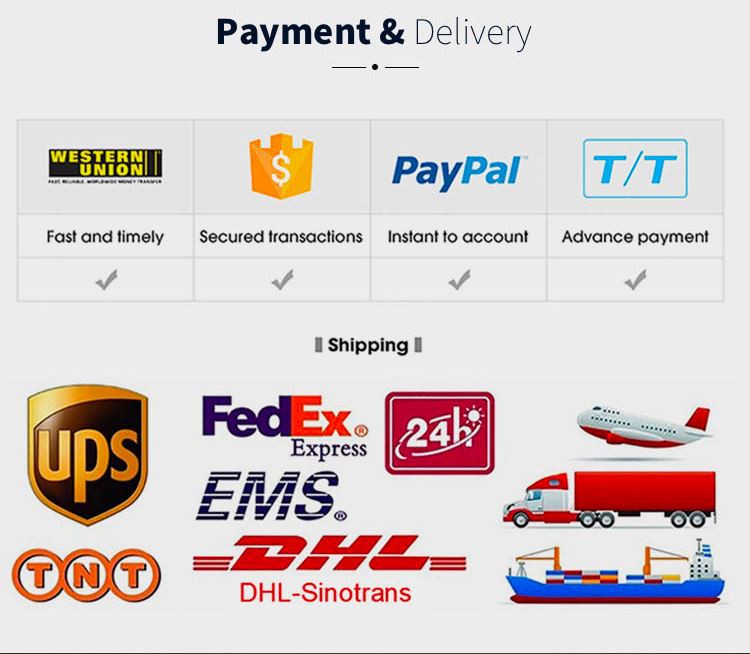
Payment & Delivery
| Accepted Delivery Terms: | FOB, CIF, FCA, EXW; |
|
Accepted Payment Currency: |
USD; |
|
Port: |
Xiamen ,China |
|
Accepted Payment Type: |
T/T,L/C,Credit Card,PayPal,Western Union |
Video
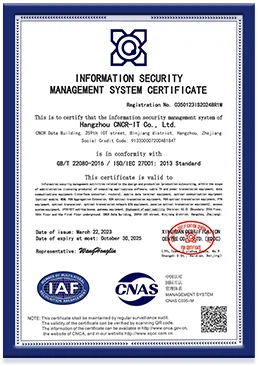
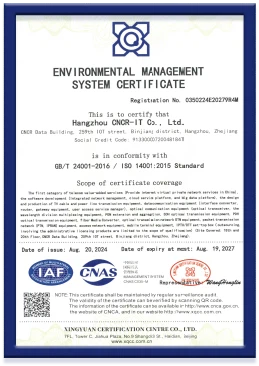
Patents & Certificates
In pursuing innovation of cutting-edge technologies, CNCR has been publishing patents every year.


Factory Environment


FAQ
We're well-known as one of the leading CWDM manufacturers in China since 1999, specialized in providing high quality customized products. Welcome to buy cheap CWDM for sale here from our factory. For price consultation, contact us.
gpon mdu with remote management, gpon mdu for voice communication, access architecture