


CNCR: Leading RF Filter Supplier
CNCR is a global leading supplier providing telecom access network solutions. Since the company was successfully listed in 2011, CNCR has always adhered to independent research and development and technological innovation, and successfully passed the highest level CMMI5 certification in the global software field.
-
![Microwave Rf F Ilter]() Microwave Rf F IlterFilter is designed to suppress harmonics and out of band noise and interference ,to improve signal quality.read more
Microwave Rf F IlterFilter is designed to suppress harmonics and out of band noise and interference ,to improve signal quality.read more -
![RF Filters For 5G]()
-
![RF Filter For 5G]()
-
![RF Band Pass Filter]() RF Band Pass FilterBand-pass filter or bandpass filter (BPF) is a device that passes frequencies within a certain range and rejects (attenuates)frequencies outside that range.read more
RF Band Pass FilterBand-pass filter or bandpass filter (BPF) is a device that passes frequencies within a certain range and rejects (attenuates)frequencies outside that range.read more -
![SMA RF Filter]() SMA RF FilterBand-pass filter or bandpass filter (BPF) is a device that passes frequencies within a certain range and rejects (attenuates)frequencies outside that range.read more
SMA RF FilterBand-pass filter or bandpass filter (BPF) is a device that passes frequencies within a certain range and rejects (attenuates)frequencies outside that range.read more -
![5G RF Filter]() 5G RF FilterBand-pass filter or bandpass filter (BPF) is a device that passes frequencies within a certain range and rejects (attenuates)frequencies outside that range.read more
5G RF FilterBand-pass filter or bandpass filter (BPF) is a device that passes frequencies within a certain range and rejects (attenuates)frequencies outside that range.read more -
![Low Pass RF Filter]() Low Pass RF FilterFilter is designed to suppress harmonics and out of band noise and interference ,to improve signal quality.read more
Low Pass RF FilterFilter is designed to suppress harmonics and out of band noise and interference ,to improve signal quality.read more -
![High Pass RF Filter]() High Pass RF FilterRF Filters Cavity Filter are components used to resolve radiated interference. They can attenuate high-frequency interference signals to a large extent and only allow frequencies that are beingread more
High Pass RF FilterRF Filters Cavity Filter are components used to resolve radiated interference. They can attenuate high-frequency interference signals to a large extent and only allow frequencies that are beingread more -
![Bandstop RF Filter]() Bandstop RF FilterThis helps minimizing the inevitable loss of useful power, and results in high stop band attenuation and steep filter edges.read more
Bandstop RF FilterThis helps minimizing the inevitable loss of useful power, and results in high stop band attenuation and steep filter edges.read more


Filter is designed to suppress harmonics and out of band noise and interference ,to improve signal quality.
This helps minimizing the inevitable loss of useful power, and results in high stop band attenuation and steep filter edges
Why Choose Us
Professional Engineer
500+ experts provides innovative solutions to ensure project quality and reliability.
Customizable R&D
Meet personalized needs, reduce costs, protect intellectual property rights, improve competitiveness, and enhance user experience.
Real-Time Support
7*24 hours global technical support service, quickly solve problems and improve user experience.
Certified Quality
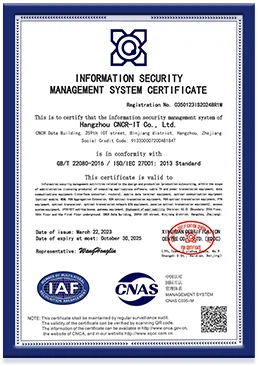
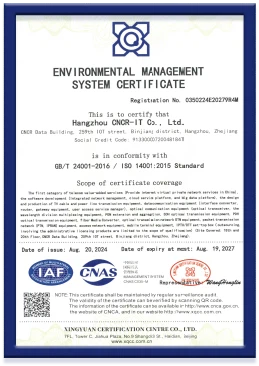
CNCR products have passed various international certifications such as ISO, CE, ROHS, improve customers' market competitiveness.
Types of RF Filters
Low Pass RF Filter: This filter allows signals with lower frequencies to pass through while blocking higher frequencies. It’s commonly used in audio processing and power supply systems to remove unwanted high-frequency noise.
High Pass RF Filter: This filter does the opposite of the low pass filter. It lets higher frequencies through and blocks lower ones. It’s useful in applications like radio transmission, where only high-frequency signals are needed.
RF Band Pass Filter: This filter only allows a specific range of frequencies to pass through, blocking both lower and higher frequencies outside that range.
Bandstop RF Filter: This filter blocks a specific range of frequencies while allowing others to pass through. It’s useful when you need to remove a particular frequency that’s causing interference.
Products Description
|
Product Model |
ZHFT-374202229-2U1B |
|
Device Type |
Band pass Filter |
|
3dB Bandwidth |
3750-4200MHz |
|
Insertion Loss(dB) |
<0.7 |
|
In/Out Impendance |
50 |
|
Return Loss(dB) |
>18 |
|
Rejection(dB)@MHz |
30.0dB min@3.7GHz/4.25GHz 50.0dB min@3.60GHz/4.35GHz 70.0dB min@3.55GHz/4.4GHz 80.0dB min@5.80-6.50GHz |
|
Working Temp(℃) |
-20~+55 |
|
RF Connectors |
CPR-229G/CPR-229F |
|
Input Power(W) |
80 |
|
Application |
Indoor |
Benefits of RF Filter
Enhanced Signal Quality
By removing high-frequency interference, RF filters significantly improve signal clarity. In applications such as telecoms, where voice and data transmissions must be crisp and clear, these filters ensure that only the necessary range of frequencies is transmitted, reducing noise and distortion.
Increased System Performance
RF filters can make RF systems more reliable and efficient in general. By eliminating unwanted signals, they help systems operate smoothly without disruptions.
Cost-Effectiveness
Using RF filters can also lead to long-term cost savings. By preventing interference-related issues that could damage equipment or require repairs, these filters help reduce maintenance costs and improve the lifespan of RF systems.
Protection of Sensitive Components
High-power or spurious RF signals can damage sensitive electronic components such as low-noise amplifiers or mixers. RF filters act as protective barriers, preventing these unwanted signals from reaching critical circuits.
Applications of RF Filter
In telecommunications, RF filters are used to separate signals in cellular networks, ensuring that communication over different frequency bands does not interfere with each other.
In radio and television broadcasting, RF filters are employed to block unwanted frequencies and manage signal bandwidth.
RF filters are integral to radar systems, helping to filter out noise and improve the detection of objects.
In medical imaging and monitoring devices, RF filters help in reducing electromagnetic interference, ensuring accurate readings and images.
RF filters are used in devices like smartphones and Wi-Fi routers to manage frequency bands and maintain performance.

Passive RF filters are constructed using only passive components such as resistors, capacitors, and inductors. They don't require any power source to operate and are generally simpler and more robust. Active RF filters, on the other hand, incorporate active components like operational amplifiers or transistors along with passive components. Active filters can provide gain, improved performance at lower frequencies, and easier tuning, but they require power to operate and can introduce additional noise.
Usage Requirements
Operating Frequency Range
The RF filter must be used strictly within its specified frequency range to ensure optimal performance and avoid signal distortion or attenuation.
Power Handling Capability
Input signal power must not exceed the filter’s rated maximum power level to prevent overheating or permanent damage.
Environmental Conditions
The filter should be operated within the recommended temperature, humidity, and vibration limits as specified in the datasheet.
Installation and Grounding
The filter must be securely mounted and properly grounded to reduce electromagnetic interference and ensure stable performance.
RF Filter Quality Inspection Process
Measurement Techniques
Accurate measurement of RF filter performance requires specialized equipment and techniques:
Vector Network Analyzers (VNAs) for S-parameter measurements.
Spectrum Analyzers for frequency domain analysis.
Time Domain Reflectometry (TDR) for impedance characterization.
Noise Figure Analyzers for noise performance evaluation.
Environmental Testing
RF filters must maintain performance under various environmental conditions:
Temperature cycling to assess stability.
Vibration and shock testing for mechanical robustness.
Humidity and salt spray tests for corrosion resistance.
Radiation hardness testing for space and military applications.


- Send us your order list (models/quantities/specification).
- We will send you PROFORMA INVOICE (PI) with shipping cost and Payment information for your confirmation.
- You arrange payment after you confirmed proforma invoice, we will arrange production after received your payment notice.
- We will arrange delivery after your payment arrived and goods ready,and at the same time we will tell you goods tracking number so that you could know your goods condition by this number from courier site.
- You will receive your order in about 3-5 days after goods ship out.
Packaging & Shipping
|
Trade Terms: |
FOB, CIF, CFR, etc |
|
Price Terms: |
T/T, Western Union, Paypal, L/C, RMB, Credit Card |
|
Lead Time: |
Generally, if the goods are in stock, shipment can be arranged within 3 working days; If the goods need to be mass produced, delivery time may be around 7-10 working days. |
|
Shipment: |
Express, Air, Sea |
|
Package Information: |
Standard carton package with the original package |
Video
Patents & Certificates
In pursuing innovation of cutting-edge technologies, CNCR has been publishing patents every year.


Factory Environment


FAQ
We're well-known as one of the leading RF filter manufacturers in China since 1999, specialized in providing high quality customized products. Welcome to buy cheap RF filter for sale here from our factory. For price consultation, contact us.
gpon mdu for iot applications, information access design, access rights management