


CNCR: Leading Duplexer Supplier
CNCR is a global leading supplier providing telecom access network solutions. Since the company was successfully listed in 2011, CNCR has always adhered to independent research and development and technological innovation, and successfully passed the highest level CMMI5 certification in the global software field.
-
![LTE Band RF Diplexer]() LTE Band RF DiplexerDuplexers are often used in radar, because the transmitter and receiver commonly share an antenna, and the returned signal doesn't vary much from the transmitted signal in frequency (just shiftedread more
LTE Band RF DiplexerDuplexers are often used in radar, because the transmitter and receiver commonly share an antenna, and the returned signal doesn't vary much from the transmitted signal in frequency (just shiftedread more -
![Cavity Duplexer]() Cavity DuplexerDon't confuse the word diplexer with duplexer, which is the three-port network that permits a transmitter and receiver to use the same antenna, at essentially the same frequency.read more
Cavity DuplexerDon't confuse the word diplexer with duplexer, which is the three-port network that permits a transmitter and receiver to use the same antenna, at essentially the same frequency.read more -
![RF Duplexer]() RF DuplexerDon't confuse the word diplexer with duplexer, which is the three-port network that permits a transmitter and receiver to use the same antenna, at essentially the same frequency.read more
RF DuplexerDon't confuse the word diplexer with duplexer, which is the three-port network that permits a transmitter and receiver to use the same antenna, at essentially the same frequency.read more -
![UMTS2100 Diplexer]() UMTS2100 Diplexer◆ More than 50~100 dB Isolation,. ◆ excellent de-coupling performance. ◆ High Average Power,Minimal Insertion Loss,read more
UMTS2100 Diplexer◆ More than 50~100 dB Isolation,. ◆ excellent de-coupling performance. ◆ High Average Power,Minimal Insertion Loss,read more -
![DCS Rf Duplexer]() DCS Rf Duplexer◆ High Average Power,Minimal Insertion Loss,. ◆ Superior Intermodulation Properties Prevent,. ◆ DIN Connectors, Custom Designs Availableread more
DCS Rf Duplexer◆ High Average Power,Minimal Insertion Loss,. ◆ Superior Intermodulation Properties Prevent,. ◆ DIN Connectors, Custom Designs Availableread more -
![GSM900 Diplexer]() GSM900 DiplexerDuplexers are often used in radar, because the transmitter and receiver commonly share an antenna, and the returned signal doesn't vary much from the transmitted signal in frequency (just shiftedread more
GSM900 DiplexerDuplexers are often used in radar, because the transmitter and receiver commonly share an antenna, and the returned signal doesn't vary much from the transmitted signal in frequency (just shiftedread more -
![GSM Duplexer]() GSM DuplexerDuplexers are often used in radar, because the transmitter and receiver commonly share an antenna, and the returned signal doesn't vary much from the transmitted signal in frequency (just shiftedread more
GSM DuplexerDuplexers are often used in radar, because the transmitter and receiver commonly share an antenna, and the returned signal doesn't vary much from the transmitted signal in frequency (just shiftedread more -
![DCS Duplexer]() DCS Duplexer◆ High Average Power,Minimal Insertion Loss,. ◆ Superior Intermodulation Properties Prevent,. ◆ DIN Connectors, Custom Designs Availableread more
DCS Duplexer◆ High Average Power,Minimal Insertion Loss,. ◆ Superior Intermodulation Properties Prevent,. ◆ DIN Connectors, Custom Designs Availableread more -
![WCDMA Duplexer]() WCDMA Duplexer◆ More than 50~100 dB Isolation,. ◆ excellent de-coupling performance. ◆ High Average Power,Minimal Insertion Loss,read more
WCDMA Duplexer◆ More than 50~100 dB Isolation,. ◆ excellent de-coupling performance. ◆ High Average Power,Minimal Insertion Loss,read more -
![LTE Duplexer]() LTE DuplexerDon't confuse the word diplexer with duplexer, which is the three-port network that permits a transmitter and receiver to use the same antenna, at essentially the same frequency.read more
LTE DuplexerDon't confuse the word diplexer with duplexer, which is the three-port network that permits a transmitter and receiver to use the same antenna, at essentially the same frequency.read more


Don't confuse the word diplexer with duplexer, which is the three-port network that permits a transmitter and receiver to use the same antenna, at essentially the same frequency.
Duplexers are often used in radar, because the transmitter and receiver commonly share an antenna, and the returned signal doesn't vary much from the transmitted signal in frequency (just shifted slightly by the Doppler effect).
Why Choose Us
Professional Engineer
500+ experts provides innovative solutions to ensure project quality and reliability.
Customizable R&D
Meet personalized needs, reduce costs, protect intellectual property rights, improve competitiveness, and enhance user experience.
Real-Time Support
7*24 hours global technical support service, quickly solve problems and improve user experience.
Certified Quality
CNCR products have passed various international certifications such as ISO, CE, ROHS, improve customers' market competitiveness.
Types of Duplexer
The Duplexer Produced by Our Company Mainly Include the Following Types:
Cavity Duplexer
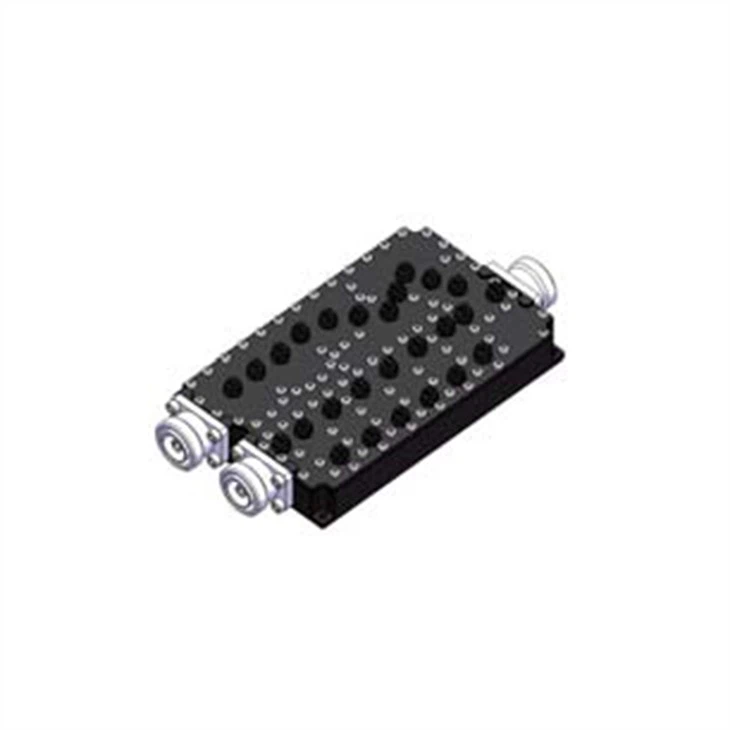
A cavity duplexer is a passive RF component that allows a device to transmit and receive signals simultaneously through a single antenna.
RF Duplexer
An RF Duplexer is an electronic device used in RF communications transceiver circuits to allow sharing of the same antenna.
LTE Duplexer
An LTE duplexer is a RF filter device that allows a single antenna to be used for both transmitting and receiving signals simultaneously on a single base station or mobile device.
DCS Duplexer
It achieves this by separating the two signals, ensuring the transmitter does not interfere with its own receiver.
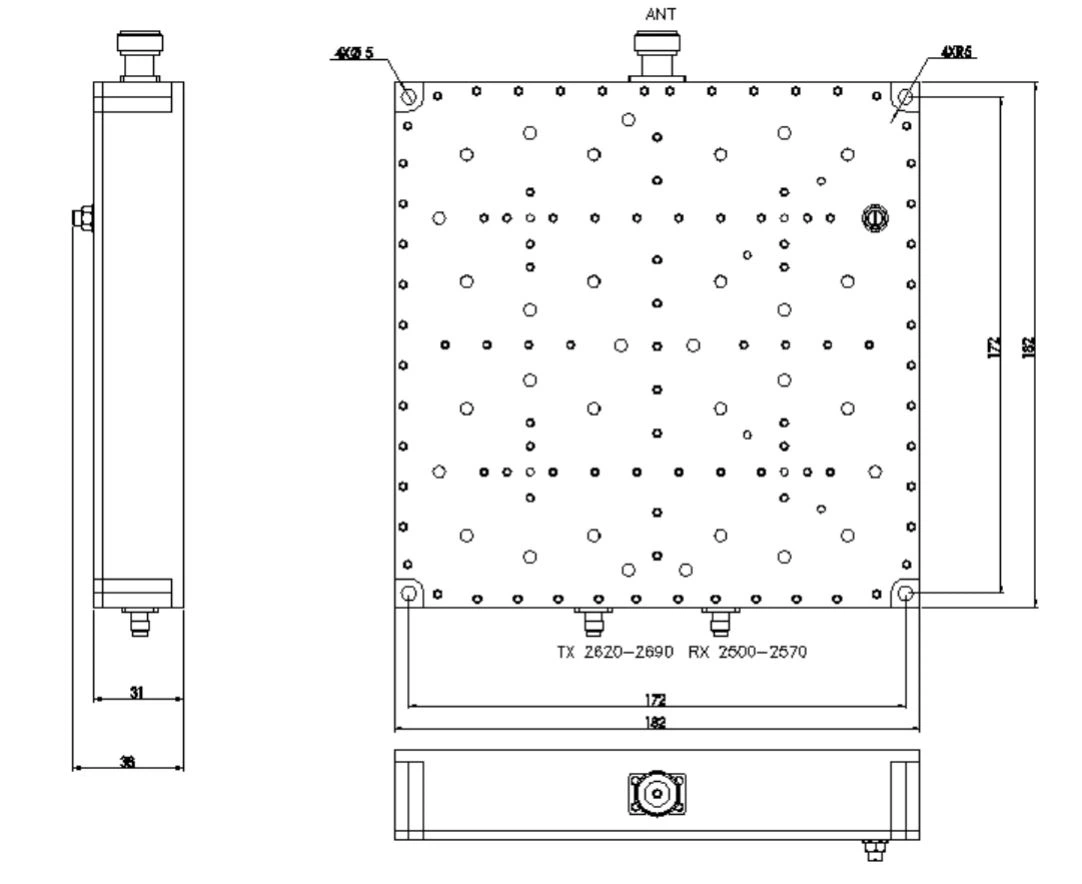
Specification
|
Type No. |
ZHDX-252603NS-5U1B |
|
|
Device Type |
2600MHz Duplexer |
|
|
Frequency Band(MHz) |
RX: 2500-2570 |
TX:2620-2690 |
|
Insertion Loss(dB) |
<0.8 |
<1.0 |
|
Isolation (dB) |
>90 |
>90 |
|
Return Loss(dB) |
>20 |
|
|
Intermodulation Products(dBc) |
<-150(3rd order; with 2 x 20 W) |
|
|
Input Average Power ,Continuous(W) |
50 |
100 |
|
Temperature Range(℃) |
-40~+55 |
|
|
Impedance(Ω) |
50 |
|
|
Connectors |
ANT:N-Female other:SMA-F |
|
|
Application |
Indoor |
|
|
Color |
Silver |
|
☆Simplicity: With a duplexer, there is no need to install and align separate transmit and receive antennas, streamlining the installation process.
☆Space and Cost Efficiency: By using a single antenna and antenna feeder cables, a duplexer helps minimize the hardware required, reducing installation costs and saving valuable space.
☆Improved Isolation: A properly tuned and high-quality duplexer can provide excellent isolation between the transmitter and receiver frequencies, reducing interference and maximizing system performance.
☆Optimized Filtering: Uses optimized filtering to reduce noise and unwanted signals, ensuring cleaner communication.
Application of Duplexer
TV Transmitters
In television and FM broadcasting systems, duplexers are used when multiple transmitters share a common antenna. A diplexer is used to separate these frequency bands so that each can be transmitted without interference.
GSM Networks
In GSM (Global System for Mobile Communications) networks, base stations often need to handle multiple frequency bands simultaneously. A diplexer allows these two signals to be separated, so they can be sent through a common antenna system without interfering with each other.
Satellite Communications
Diplexers are crucial in satellite communication systems where multiple frequency bands are often used for transmission and reception. For instance, the uplink frequency from a ground station might be different from the downlink frequency, and a diplexer helps in separating these signals.
Radar Systems
In radar systems, a duplexer is used to switch between the transmitter and receiver while using the same antenna. This allows the radar to transmit and receive signals alternately without damaging the sensitive receiver from the powerful transmitted pulse.
Difference Between Diplexer and Duplexer
The following table highlights the difference between diplexers and duplexers.
|
Specifications |
Diplexer |
Duplexer |
|
What is it |
It consists of a set of filters which allows separate processing of signals with widely differing frequencies. It separates two different bands in the receive path and combines them in the transmit path. |
It consists of two filters (of bandpass type) which allows simultaneous transmission and reception within the same band and using the same antenna. |
|
Direction of operation |
It usually operates with signals flowing in the same direction. |
It usually operates with signals flowing both ways at the antenna. |
|
Separation of bands |
Operates on wide apart frequency bands |
Frequency bands of Tx and Rx path are very nearer |
|
Tx-Rx Isolation |
50 to 60 dB |
90 to 95 dB |
|
Examples/Applications |
Smart phones use LC diplexers, other examples of diplexers are antenna splitters, DSL splitters, speaker crossover networks |
Smart phones use SAW duplexers |
How to Measure Duplexer Isolation
Power-measurement method
Inject test signals with known power into the transmit and receive ports and measure the signal power appearing at the opposite port. The ratio between the measured power at the non-intended port and the input power is used to calculate isolation. This method evaluates isolation performance at different power levels.
Spectrum-analysis method
Apply test signals at different frequencies to the transmit and receive ports and use a spectrum analyzer to measure the power of signals appearing on the receive channel. Comparing received power across frequencies yields the isolation profile versus frequency. This method is suitable for evaluating isolation across the operational band.
Reflection-coefficient method
Send test signals at various frequencies into the duplexer and measure the reflected signals or S11/S21 parameters from the receive port. Comparing reflection or transmission coefficients across frequency provides information about the duplexer’s frequency response and isolation performance.
- Send us your order list (models/quantities/specification).
- We will send you PROFORMA INVOICE (PI) with shipping cost and Payment information for your confirmation.
- You arrange payment after you confirmed proforma invoice, we will arrange production after received your payment notice.
- We will arrange delivery after your payment arrived and goods ready,and at the same time we will tell you goods tracking number so that you could know your goods condition by this number from courier site.
- You will receive your order in about 3-5 days after goods ship out.

Packaging & Shipping
|
Trade Terms: |
FOB, CIF, CFR, etc |
|
Price Terms: |
T/T, Western Union, Paypal, L/C, RMB, Credit Card |
|
Lead Time: |
Generally, if the goods are in stock, shipment can be arranged within 3 working days; If the goods need to be mass produced, delivery time may be around 7-10 working days. |
|
Shipment: |
Express, Air, Sea |
|
Package Information: |
Standard carton package with the original package |
Video
Patents & Certificates
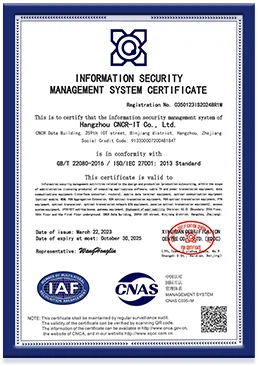
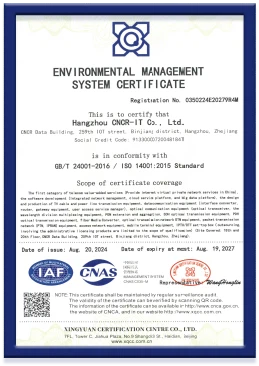
In pursuing innovation of cutting-edge technologies, CNCR has been publishing patents every year.


Factory Environment


FAQ
We're well-known as one of the leading duplexer manufacturers in China since 1999, specialized in providing high quality customized products. Welcome to buy cheap duplexer for sale here from our factory. For price consultation, contact us.
fiber optic gpon mdu, gpon mdu for long distance transmission, gpon mdu for enterprise use